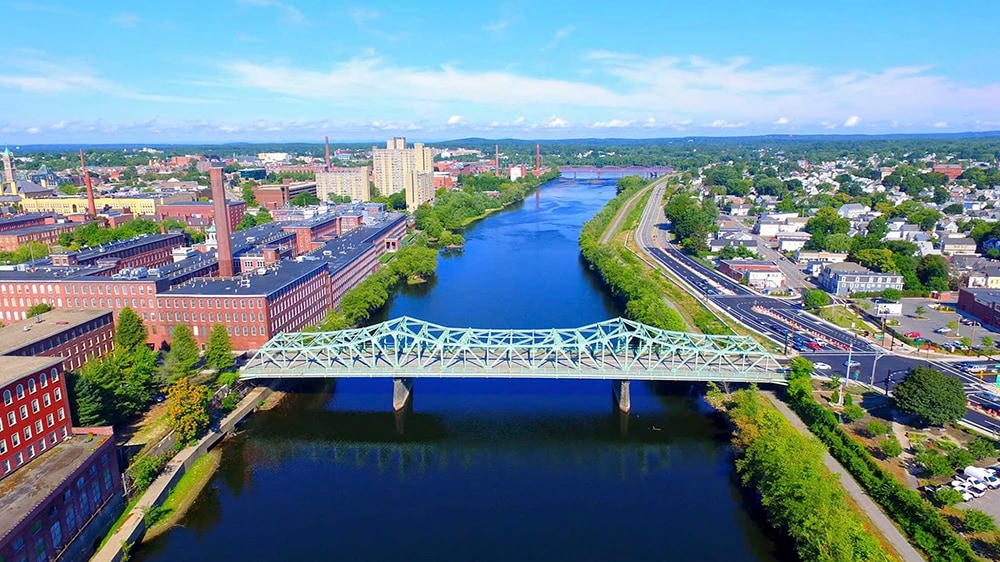

Tyngsborough, Massachusetts sits along the Massachusetts–New Hampshire border, about 30 miles north of Boston and just south of Nashua, New Hampshire. Founded in 1661 by Colonel Jonathan Tyng, the town developed along the Merrimack River, which has long shaped its landscape, economy, and connection to the wider region.
One of Tyngsborough’s most notable historic landmarks is the Tyng Mansion House, among the oldest surviving homes north of Boston. Early settlement in the area occurred during a period of colonial expansion and conflict, and some historic homes still reflect the defensive architecture of that era. Today, these structures serve as reminders of the complex and layered history that shaped the town.
Tyngsborough balances suburban neighborhoods with preserved forested land, farms, streams, lakes, and great ponds that speak to its rural roots. Outdoor recreation and scenic waterways remain central to the town’s character, offering opportunities for walking, paddling, fishing, and quiet exploration along the Merrimack River corridor.
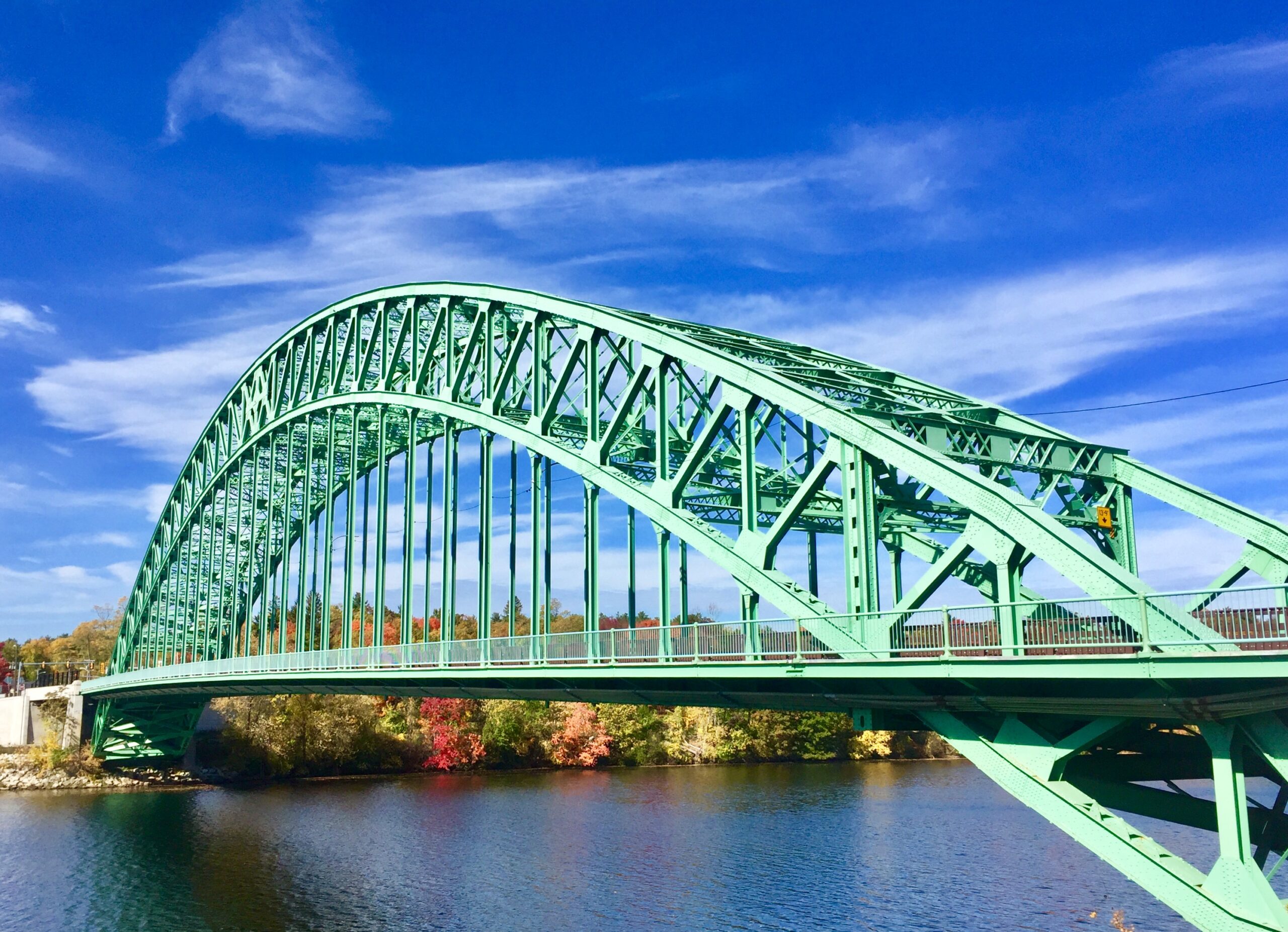
Often referred to as a northern gateway along the Route 3 corridor, Tyngsborough provides easy access to both Greater Boston and destinations in New Hampshire and beyond. The town’s iconic green bridge spanning the Merrimack River has become a visual symbol of this connection. Tyngsborough is also known for its strong school community, including a high school recognized for athletic programs and school spirit.
With a growing business community, historic charm, and natural surroundings, Tyngsborough offers a blend of accessibility and everyday livability within the Revolutionary Valley.
Tyngsborough, Massachusetts
Tyngsborough, MA