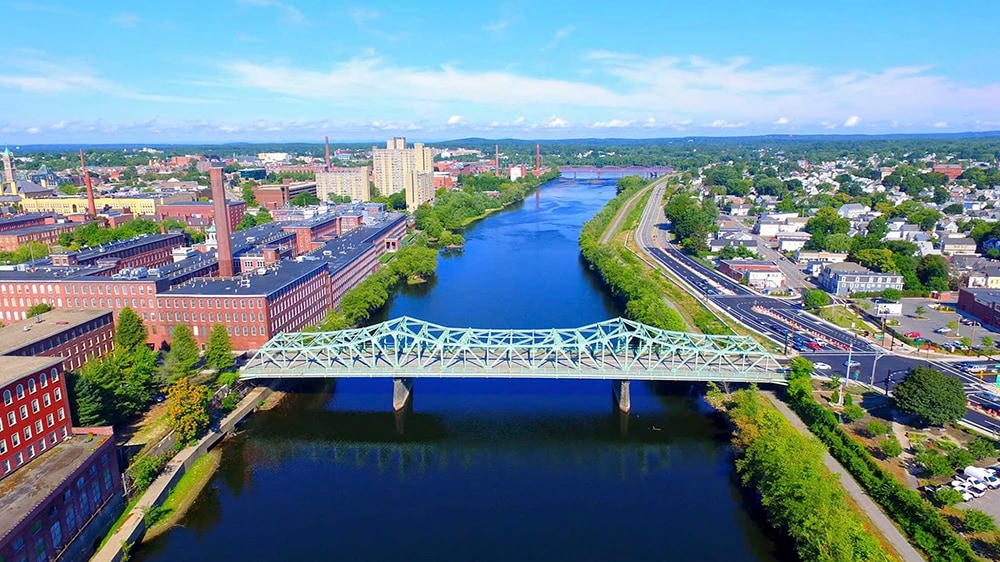


Settled in 1640 and incorporated in 1642, Woburn, Massachusetts is a historic city located about ten miles north of Boston, situated in the upper Mystic River Valley. As one of the area’s early English settlements, Woburn played an important role in the region’s industrial and transportation history.
In its early years, Woburn became a manufacturing center known for leather tanning and shoe production. By the time of King Philip’s War, shoe manufacturing was so central to the local economy that town taxes were partially paid in footwear. Like many early colonial communities, Woburn was also shaped by hardship, including a devastating smallpox epidemic in the late 1600s. The arrival of the Middlesex Canal in the early 19th century and the Boston and Lowell Railroad in 1835 further connected Woburn to regional and national trade networks.
Today, Woburn blends its industrial roots with suburban living and modern innovation. The city is home to a range of high-tech, healthcare, and pharmaceutical companies, alongside established neighborhoods and local businesses. Its location offers direct access to Routes 93 and 128, making Woburn an easy commute to Boston, the North Shore, and the broader Revolutionary Valley.
One of Woburn’s most beloved natural features is Horn Pond, a scenic urban oasis offering walking paths, water views, and year-round recreation. The pond and surrounding parkland provide a peaceful contrast to the city’s busy corridors and reflect Woburn’s commitment to accessible green space.
Cultural and historic attractions include the Joseph Bartlett House and the Benjamin Thompson House, both listed on the National Register of Historic Places, as well as preserved sections of the historic Middlesex Canal. With commuter rail service to Boston, local bus routes, and Amtrak access north to Maine, Woburn remains a well-connected city that balances history, nature, and modern life.
Woburn, Massachusetts
Woburn, MA